

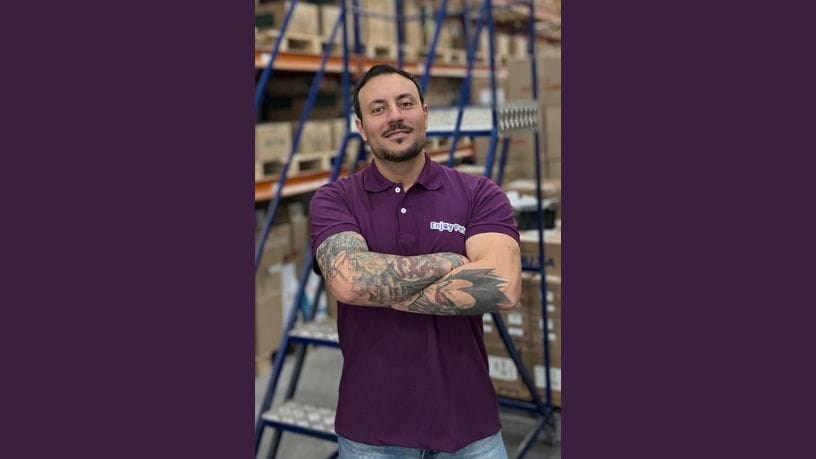
Every pet e-commerce founder eventually asks the same question: is it time to move sales onto Mercado Livre, Shopee or Amazon, or does the business lose more than it gains by doing so. That question, in the reading of Hugo Galvao de Franca Filho, founder and director of Enjoy Pets, is the wrong one from the start, since the two channels rarely compete for the same purpose inside a single business.
A marketplace brings volume and discovery, an owned store brings margin and control over the customer relationship. Framing the decision as either or forces a founder to give up one of those two things without needing to, when the real question is how much of the catalog belongs in each channel and why. That split, not a choice between the two, is what this piece works through.
Why the question is not marketplace versus one’s own store
Marketplaces solve a distribution problem that an owned store cannot match on its own: millions of shoppers already searching for a product, with no need to build that traffic from zero. That reach comes at a cost, in fees and in reduced control over price, presentation, and the customer’s data after the sale closes.
An owned store flips those trade-offs. It keeps a full margin and a direct line to the buyer, useful for building the kind of repeat relationship a pet business depends on, but every visitor has to be earned through paid ads, search ranking, or word of mouth, none of which is free or fast.
What changes once a marketplace becomes the main channel
Once marketplace orders make up most of a business’s revenue, the founder stops owning the customer relationship in the way they once did. The platform holds the contact information, the review history and, in practice, the decision about who ranks higher in search results for the next buyer.
That shift is manageable as long as it stays deliberate, as Hugo Galvao de Franca Filho puts it. A business that treats marketplace revenue as the entire strategy, rather than one channel among several, ends up with no fallback the day the platform changes its fee structure or algorithm, something outside any seller’s control.
When keeping an owned store still makes sense
Products with higher margins, or ones that benefit from an explanation the marketplace listing format cannot fit, tend to perform better through an owned store, where a founder can control the page layout and the buying context. Subscription-based restocking, common for food and litter, also works better outside a marketplace built around single purchases.
Part of the catalog stays inside the Enjoy Pets store for exactly this reason, reserving the marketplace channel for products that benefit from search volume rather than explanation, a split that Hugo Galvao reviews by category rather than all at once for the entire catalog.
Deciding by margin and control, not by trend
The decision that matters is not whether to be in a marketplace, most sellers already are, but which share of the catalog should stay there and which share earns more by living somewhere the founder fully controls. That split changes as a product line matures, and it rarely stays fixed for long.
For Hugo Galvao, founders who revisit this split every few months instead of setting it once and forgetting it are the ones who keep both margin and reach working for the business at the same time. Chasing a single channel because it is trending is how a founder ends up with neither. Anyone curious to see that split applied in practice can find the Enjoy Pets catalog organized this way, between its own store and marketplace, at www.enjoypets.com.br.